
My Town Tutors is a great resource for parents & teachers. Check out our Guest
Blogs for Education, Parents, Travel, Tutoring, Sports, Music and College.
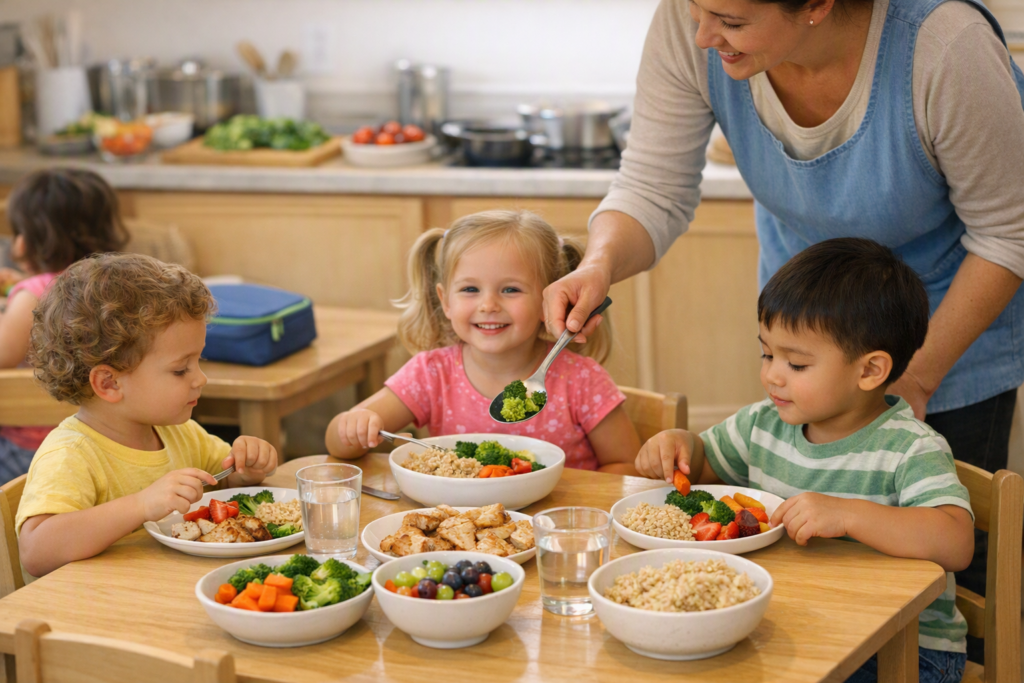
Packing a nutritious lunch for a young child sounds straightforward. In reality, it often means rushing to find food that is healthy, allergy-aware, easy to transport and likely to be eaten rather than returned home untouched.
While a healthy lunchbox can certainly work well, many childcare centres now provide freshly prepared meals that offer greater variety, easier allergy management and valuable shared dining experiences. Understanding what makes a strong nutrition program can help you compare centres with confidence.
However, simply having a kitchen does not guarantee a high-quality menu. This article will help you understand why freshly prepared meals can be beneficial and what to examine when comparing nutrition programs at daycare centres.
Table of contents
- Why freshly prepared meals can make a difference
- How shared meals encourage healthy eating habits
- The connection between nutrition and learning
- What to look for in a daycare nutrition program
- Questions to ask during a centre tour
- Supporting healthy eating habits at home
Why freshly prepared meals can make a difference
Meals cooked at a childcare centre can be planned around the needs of young children rather than the practical limitations of a lunchbox.
A well-designed menu may include vegetables, fruit, wholegrains, lean proteins and suitable dairy foods or alternatives across the week. This helps children experience a broader range of nutrients, flavours and textures.
The Australian Dietary Guidelines recommend eating a variety of nutritious foods from the five main food groups. They also advise limiting foods high in saturated fat, added salt and added sugars. These principles give childcare services a useful foundation for planning balanced meals.
When assessing a centre’s daycare nutrition program, look beyond whether food is described as “fresh” or “healthy”. Ask how menus are developed, how often they change and whether they are reviewed against recognised nutrition guidance.
In-house cooking can offer several practical advantages:
- Meals can be served at an appropriate temperature.
- Recipes can be adjusted to suit children’s developmental stages.
- Portions can be based on children’s ages and appetites.
- Menus can rotate instead of relying on the same lunchbox staples.
- Educators can communicate with kitchen staff about children’s preferences.
- Ingredients and substitutions can be monitored within the centre.
Packed lunches can certainly be nutritious, particularly when families have enough time, suitable storage and clear guidance. The advantage of a strong in-house program is consistency: balanced food planning becomes part of the service rather than another daily responsibility for families.
How shared meals encourage healthy eating habits
Young children learn by watching others. Mealtimes give them an opportunity to observe educators and peers trying different foods, using utensils, taking turns and talking positively about what they are eating.
A child who refuses vegetables at home may be more willing to taste them when everyone at the table is eating the same meal. This does not mean children should be pressured to clear their plates. Instead, repeated, relaxed exposure can make unfamiliar foods feel less intimidating.
Shared dining also supports skills that become useful during the daycare to preschool transition. Sitting with a group, following routines, communicating needs and managing food more independently can all help children feel comfortable as expectations gradually change.
Healthy eating isn’t just about what’s on the plate. The environment surrounding the meal matters too.
Educators can support positive experiences by:
- Allowing children enough time to eat.
- Encouraging tasting without forcing it.
- Avoiding labels such as “good”, “bad” or “naughty” food.
- Talking about colour, texture, smell and where food comes from.
- Respecting signs that a child is hungry or full.
- Involving children in simple food-related activities.
NSW Health’s Munch & Move program promotes healthy eating through everyday early childhood routines and play-based learning. Its whole-service approach involves educators, cooks, directors, children and families rather than treating nutrition as the kitchen’s responsibility alone.
The connection between nutrition and learning
Young children have busy days. They are building, climbing, listening, talking, solving problems and learning how to regulate their emotions. Regular meals and snacks help support the energy needed for these activities.
A thoughtful daily menu should distribute food across the day rather than relying on one large lunch. Depending on operating hours, this may include breakfast, morning tea, lunch, afternoon tea and a late snack.
Consistency is especially valuable. When children understand when meals are served and have access to suitable options, they can participate in the day without hunger becoming an unnecessary distraction.
Food experiences can also become part of the learning program. Children might:
- Grow herbs or vegetables.
- Help wash produce.
- Measure ingredients during a cooking activity.
- Sort foods by colour or texture.
- Learn how different cultures prepare meals.
- Talk about reducing food waste.
These activities turn nutrition into something children can understand and enjoy, rather than a set of rules imposed by adults.
What to look for in a daycare nutrition program
Not every in-house menu is automatically balanced. Parents should examine the quality of the entire system, from menu planning to allergen controls.
| Area to examine | Positive signs | Points to question |
| Menu variety | Seasonal menus with varied proteins, vegetables, grains and fruit | The same meals appearing every week |
| Menu planning | Menus informed by recognised dietary guidance | Vague claims without a clear planning process |
| Fresh preparation | Meals prepared on site using identifiable ingredients | Heavy reliance on highly processed convenience foods |
| Allergies | Documented procedures, staff communication and safe substitutions | Informal or unclear allergen controls |
| Cultural inclusion | Meals reflecting different cultural backgrounds and family preferences | A menu that offers little variety or flexibility |
| Age suitability | Textures and portions adjusted for different developmental stages | Identical food presentation for babies and preschoolers |
| Transparency | Menus shared with families and changes clearly communicated | Families cannot access current menus |
| Mealtime approach | Calm, social meals without pressure | Children being forced to finish food |
NSW Health provides menu-planning resources for early childhood services, including guidance intended to help services align menus with Australian dietary recommendations.
Questions to ask during a centre tour
A centre tour provides a useful opportunity to look beyond a sample menu. Ask practical questions that reveal how the program works from day to day.
Useful questions include:
- Are meals prepared on site each day?
- Who plans and reviews the menu?
- How often does the menu rotate?
- How are dietary requirements documented?
- What steps prevent allergen cross-contact?
- How are families informed when a meal changes?
- What happens when a child refuses the main meal?
- Are children offered suitable alternatives?
- How are portions adjusted for different ages?
- Can parents provide feedback about the menu?
- How do educators encourage children to try unfamiliar foods?
- Are cultural and religious food requirements accommodated?
Observe the environment as well as the answers. Is the current menu displayed? Do children appear relaxed during meals? Are educators sitting and engaging with them? Are drinking-water stations accessible?
Small details often reveal more than broad statements about “healthy eating”.
Supporting healthy eating habits at home
A childcare nutrition program works best when the centre and family communicate. Parents do not need to recreate the daycare menu at home, but they can use it for ideas and reinforce the same calm approach to food.
You might ask your child what they ate, which colours they noticed or whether they tried something new. Keep the conversation curious rather than testing whether they finished everything.
It can also help to:
- Offer familiar foods alongside new ones.
- Give children simple choices between two suitable options.
- Involve them in shopping or food preparation.
- Continue offering rejected foods without pressure.
- Share family recipes with the centre where appropriate.
- Tell educators about changing allergies or dietary needs promptly.
Remember that children’s appetites vary. Growth, activity, sleep and illness can all affect how much a child wants to eat on a particular day. A positive nutrition program should respond to those cues while continuing to offer balanced choices.
Choose a program that treats food as part of education
Freshly cooked daycare meals can reduce pressure on families, offer children greater variety and create valuable opportunities for social learning. Their real strength, however, depends on thoughtful planning, safe preparation and a respectful mealtime culture.
When comparing centres, don’t judge the program by a single appealing menu. Look at how ingredients are selected, how dietary needs are managed, how educators behave at the table and whether families receive clear information.
The best nutrition programs do more than fill children’s plates. They help children become comfortable with food, curious about new flavours and increasingly confident during shared meals.
Ultimately, choosing a childcare centre isn’t just about today’s lunch. It’s about finding a service that helps children build healthy eating habits they’ll carry into school and beyond.